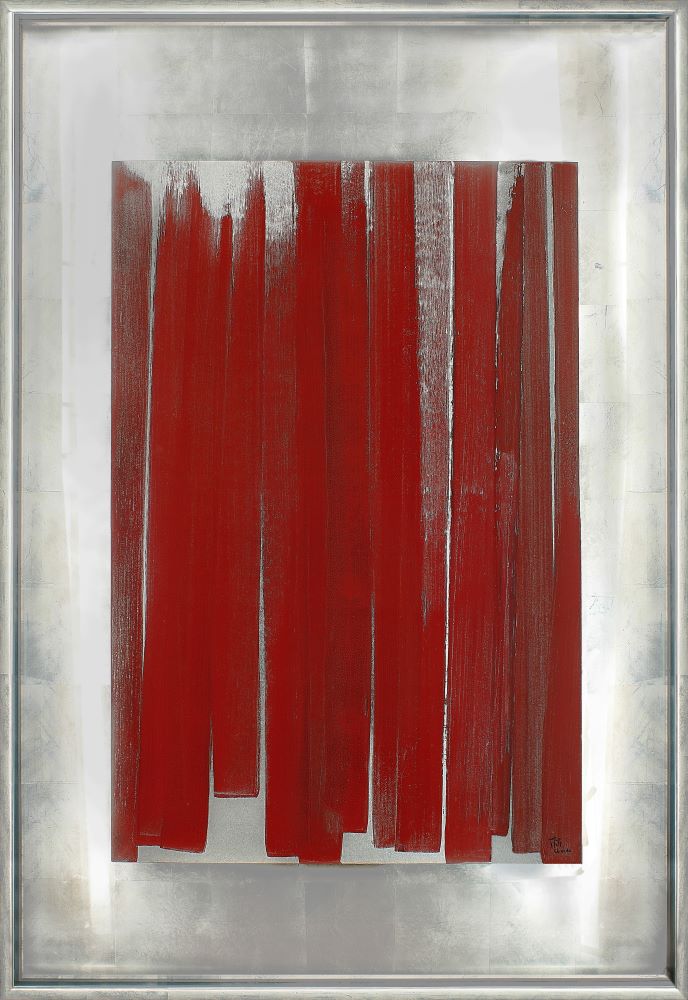
- Vermilion from the Past/2010年
Toko Shinoda
篠田桃紅
- ART FAIR - MEET YOUR ARTISTS
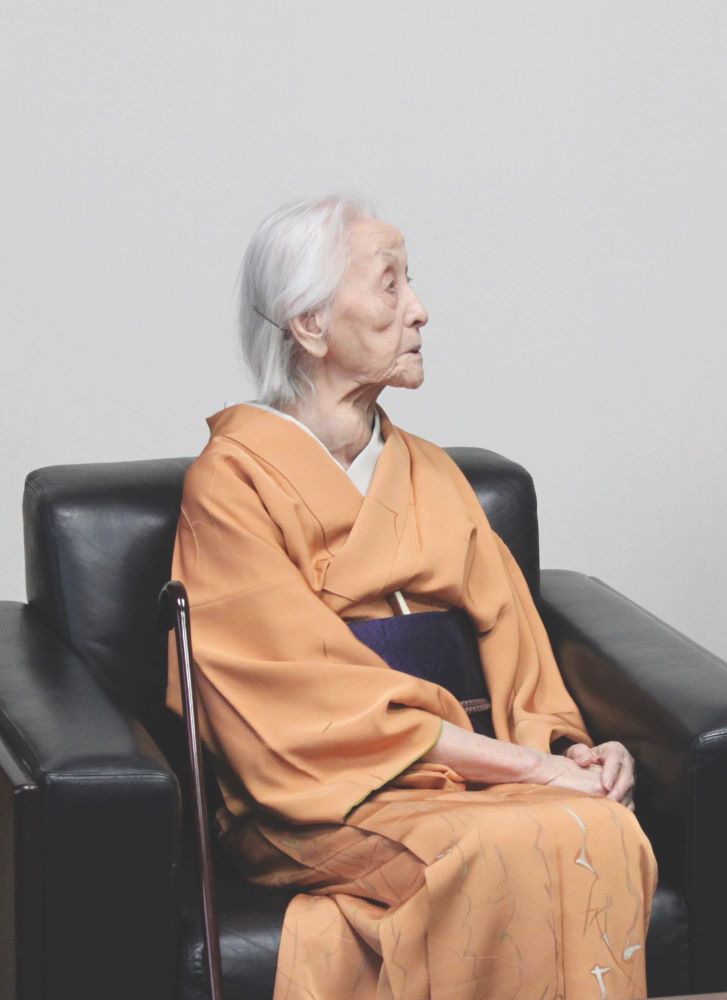
篠田桃紅(しのだ・とうこう、1913 – 2021 年)は、中国・大連に生まれる。5 歳より父の手ほどきで書に親しみ、東京での学業を修めたのち、書道の指導にあたる。1940年、銀座・鳩居堂にて初の個展を開催。やがて伝統的な文字の「意味」や「形」にとらわれることに限界を感じ、言語の枠を超えた自由な表現を志すようになる。
1956 年、43 歳で単身渡米。文化的な境界を越えて自己を表現したいという願いは、ボストンやニューヨークでの個展として結実した。ウォルター・グロピウスら著名な文化人を惹きつけ、西洋の抽象表現主義と日本の前衛書を融合させた独自のスタイル高く評価された。帰国後は、寺院や公共施設、皇室ゆかりの空間にも作品を提供。墨、版画、ミクストメディアを通して抽象表現を深化させ、100 歳を超えても創作を続けた。晩年には金銀箔を用いた繊細かつ研ぎ澄まされた表現にも取り組んでいる。
篠田の作品は、国内外の主要美術館をはじめ、ロックフェラー家など世界的なコレクターにも所蔵されている。
墨による抽象芸術の先駆者として、篠田桃紅は日本のみならず、世界の現代美術に深い足跡を残した。
Toko Shinoda (1913 - 2021) was born in Dalian, China. Guided by her father, she began studyingcalligraphy at the age of five. After completing her education in Tokyo, she began teaching calligraphy and, in 1940, held her first solo exhibition at Kyukyodo in Ginza, Tokyo. Over time,she began to feel limited by the “meaning” and “form” of traditional characters and sought a freer mode of expression beyond the framework of language.
In 1956, at the age of 43, she traveled alone to the United States in pursuit of artistic freedom beyond cultural boundaries. Her exhibitions in Boston and New York attracted prominent cultural figures such as Walter Gropius, and her unique style—fusing Western abstract expressionism with avant-garde Japanese calligraphy—was widely acclaimed.
After returning to Japan, she created large-scale works for temples, public spaces, and institutions affiliated with the Imperial Household. Through sumi ink paintings, prints, and mixed media, she further deepened her abstract expression. Even beyond the age of 100, she continued to create,eventually exploring refined expressions using gold and silver leaf.
Her works have been collected by major museums in Japan and abroad, as well as by distinguished collectors, including the Rockefeller family. As a pioneer of abstract art through sumi ink, Toko Shinoda left a profound legacy not only in Japanese art, but in the global contemporary art world.
篠田桃紅_CV(JP)
Toko Shinoda_CV(EN)
1956 年、43 歳で単身渡米。文化的な境界を越えて自己を表現したいという願いは、ボストンやニューヨークでの個展として結実した。ウォルター・グロピウスら著名な文化人を惹きつけ、西洋の抽象表現主義と日本の前衛書を融合させた独自のスタイル高く評価された。帰国後は、寺院や公共施設、皇室ゆかりの空間にも作品を提供。墨、版画、ミクストメディアを通して抽象表現を深化させ、100 歳を超えても創作を続けた。晩年には金銀箔を用いた繊細かつ研ぎ澄まされた表現にも取り組んでいる。
篠田の作品は、国内外の主要美術館をはじめ、ロックフェラー家など世界的なコレクターにも所蔵されている。
墨による抽象芸術の先駆者として、篠田桃紅は日本のみならず、世界の現代美術に深い足跡を残した。
Toko Shinoda (1913 - 2021) was born in Dalian, China. Guided by her father, she began studyingcalligraphy at the age of five. After completing her education in Tokyo, she began teaching calligraphy and, in 1940, held her first solo exhibition at Kyukyodo in Ginza, Tokyo. Over time,she began to feel limited by the “meaning” and “form” of traditional characters and sought a freer mode of expression beyond the framework of language.
In 1956, at the age of 43, she traveled alone to the United States in pursuit of artistic freedom beyond cultural boundaries. Her exhibitions in Boston and New York attracted prominent cultural figures such as Walter Gropius, and her unique style—fusing Western abstract expressionism with avant-garde Japanese calligraphy—was widely acclaimed.
After returning to Japan, she created large-scale works for temples, public spaces, and institutions affiliated with the Imperial Household. Through sumi ink paintings, prints, and mixed media, she further deepened her abstract expression. Even beyond the age of 100, she continued to create,eventually exploring refined expressions using gold and silver leaf.
Her works have been collected by major museums in Japan and abroad, as well as by distinguished collectors, including the Rockefeller family. As a pioneer of abstract art through sumi ink, Toko Shinoda left a profound legacy not only in Japanese art, but in the global contemporary art world.
篠田桃紅_CV(JP)
Toko Shinoda_CV(EN)
