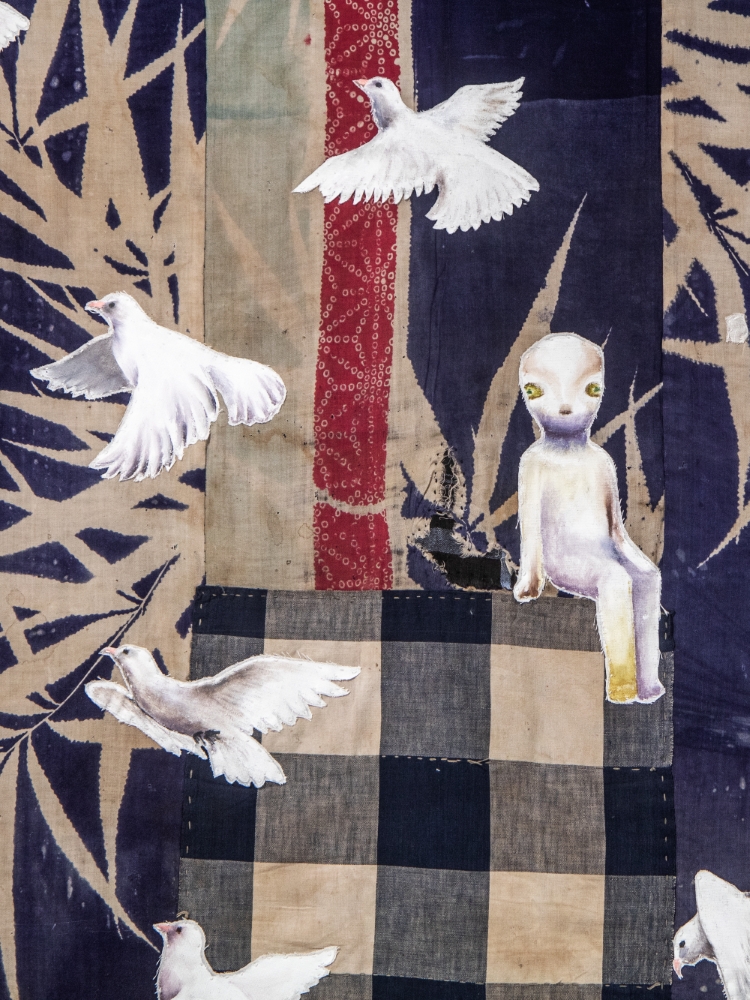
- 《Meisai》/2025
Daijiro Hama
濱大二郎
- ART FAIR - MEET YOUR ARTISTS
He was born in Izumo, Shimane Prefecture. Driven by an interest in Izumo mythology and folk culture, he develops his own unique artistic expressions that cross tribal cultures, vintage culture, and ink expression from around the world.
In 2005, he moved to Toronto, Canada, where he worked as a vintage dealer while participating in the video production collective "Exploding Motor Car." After returning to Japan, he based in Kyoto and studied under the Mohist Reiko Yoshida and began full-scale production. Since 2018, he has moved to the Netherlands, and from 2026, he will reestablish a base in Kyoto. Currently, he travels between Europe and Kyoto, presenting paintings and live performances.
In recent years, he has attempted to establish an 'innocent state' through painting. It is not merely purity, but a neutral and undifferentiated state where humanity, wildness, a sense of connection to the present, and the presence of nature are all mixed together.
Within the works, images resembling fragments of humans, figures, fungi, cells, and landscapes are interwoven, crossing boundaries between organic and inorganic matter, humanity and anonymity, micro and macro. Through this ambiguous state, it seeks to create a space where the viewer's own senses, memories, and inner selves are projected.
Moreover, while depicting imaginative images, they are constantly connected to the sensations of reality and the human presence. Just as painting has historically visualized what people seek from external beings, in modern times, I am engaged daily with my works to raise the senses and presence within people as visual vision.
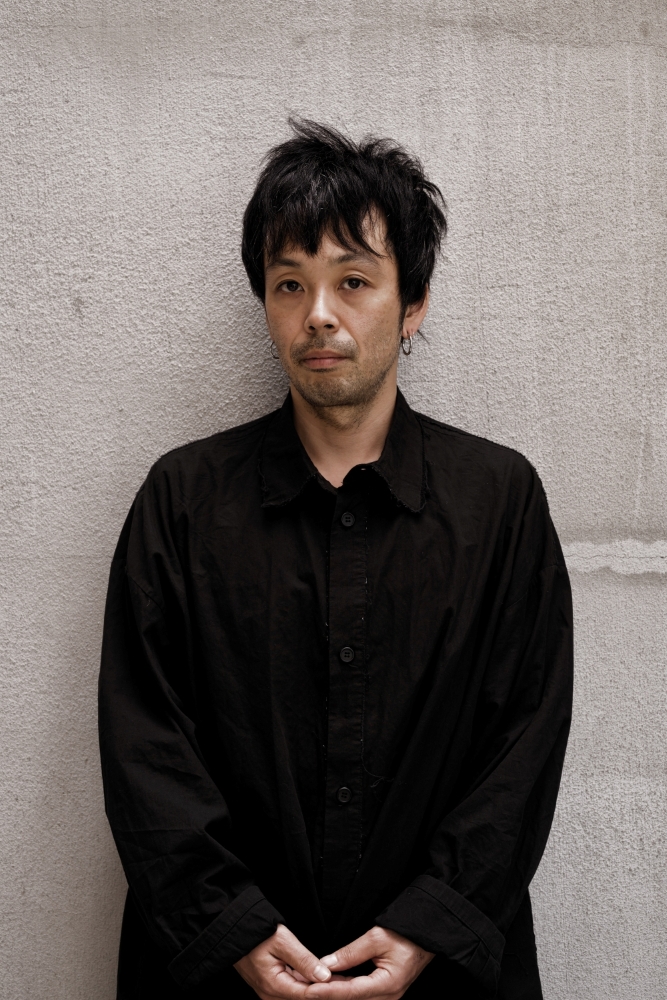
Profile image: Photo by Nigel Bakker
Born in Izumo, Shimane, Daijiro Hama develops a distinctive pain terly practice informed by interests in Izumo mythology and folk culture, while traversing influences ranging from global tribal cultures and vintage aesthetics to the expressive possibilities of sumi ink.
In 2005, he moved to Toronto, Canada, where he worked as a vintage dealer while participating in the film production collective “Exploding Motor Car,” contributing to costume and set design. After returning to Japan, he studied under sumi artist Reiko Yoshida in Kyoto and began his artistic practice in earnest. In 2018, he relocated to the Netherlands and, in 2026, re-established a base in Kyoto. He currently moves between Europe and Kyoto, presenting pain tings and live performances internationally.
In recent years, Hama has explored the idea of “Muku” through pain ting. A Japanese term that cannot be translated directly, “Muku” evokes states of innocence, purity, and untouched presence. For Hama, it suggests a neutral and undifferentiated condition in which human sensibility, rawness, a connection to the contemporary world, and the presence of nature coexist.
Within his works, images of humans, figures, fungi, cells, and fragments of landscape intermingle, traversing boundaries between the organic and inorganic, humanity and anonymity, the micro and macro. Through these ambiguous states, he seeks to create a space onto which viewers may project their own sensations, memories, and inner worlds.
While his imagery often evokes the imaginary, it remains deeply connected to physical reality and the presence of the human body. Just as pain ting throughout history has visualised what people sought beyond themselves, Hama continues to engage with his work daily, giving visual form to the subtle sensations and unseen presences that reside with in human experience.
Profile credit:Photo by Nigel Bakker
Daijiro Hama_CV (JP)
Daijiro Hama_CV(EN)
In 2005, he moved to Toronto, Canada, where he worked as a vintage dealer while participating in the video production collective "Exploding Motor Car." After returning to Japan, he based in Kyoto and studied under the Mohist Reiko Yoshida and began full-scale production. Since 2018, he has moved to the Netherlands, and from 2026, he will reestablish a base in Kyoto. Currently, he travels between Europe and Kyoto, presenting paintings and live performances.
In recent years, he has attempted to establish an 'innocent state' through painting. It is not merely purity, but a neutral and undifferentiated state where humanity, wildness, a sense of connection to the present, and the presence of nature are all mixed together.
Within the works, images resembling fragments of humans, figures, fungi, cells, and landscapes are interwoven, crossing boundaries between organic and inorganic matter, humanity and anonymity, micro and macro. Through this ambiguous state, it seeks to create a space where the viewer's own senses, memories, and inner selves are projected.
Moreover, while depicting imaginative images, they are constantly connected to the sensations of reality and the human presence. Just as painting has historically visualized what people seek from external beings, in modern times, I am engaged daily with my works to raise the senses and presence within people as visual vision.
Profile image: Photo by Nigel Bakker
Born in Izumo, Shimane, Daijiro Hama develops a distinctive pain terly practice informed by interests in Izumo mythology and folk culture, while traversing influences ranging from global tribal cultures and vintage aesthetics to the expressive possibilities of sumi ink.
In 2005, he moved to Toronto, Canada, where he worked as a vintage dealer while participating in the film production collective “Exploding Motor Car,” contributing to costume and set design. After returning to Japan, he studied under sumi artist Reiko Yoshida in Kyoto and began his artistic practice in earnest. In 2018, he relocated to the Netherlands and, in 2026, re-established a base in Kyoto. He currently moves between Europe and Kyoto, presenting pain tings and live performances internationally.
In recent years, Hama has explored the idea of “Muku” through pain ting. A Japanese term that cannot be translated directly, “Muku” evokes states of innocence, purity, and untouched presence. For Hama, it suggests a neutral and undifferentiated condition in which human sensibility, rawness, a connection to the contemporary world, and the presence of nature coexist.
Within his works, images of humans, figures, fungi, cells, and fragments of landscape intermingle, traversing boundaries between the organic and inorganic, humanity and anonymity, the micro and macro. Through these ambiguous states, he seeks to create a space onto which viewers may project their own sensations, memories, and inner worlds.
While his imagery often evokes the imaginary, it remains deeply connected to physical reality and the presence of the human body. Just as pain ting throughout history has visualised what people sought beyond themselves, Hama continues to engage with his work daily, giving visual form to the subtle sensations and unseen presences that reside with in human experience.
Profile credit:Photo by Nigel Bakker
Daijiro Hama_CV (JP)
Daijiro Hama_CV(EN)

